
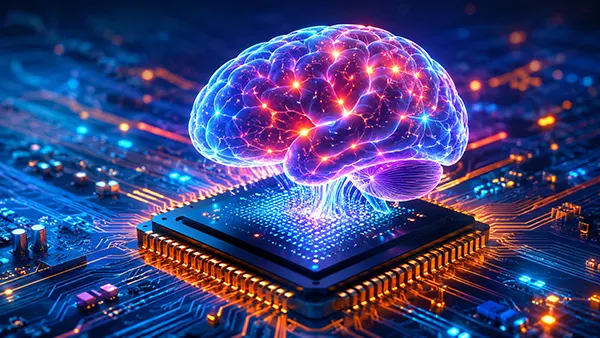
Neuromorphic Chips: How Brain-Inspired Processors Could Transform Computing
For decades, computing performance has largely depended on increasing transistor density and improving processor efficiency. However, traditional architectures are approaching physical and economic limits that make further gains increasingly difficult. As researchers search for new approaches, neuromorphic computing has emerged as one of the most promising directions. Inspired by the structure and behaviour of the human brain, neuromorphic chips are designed to process information differently from conventional CPUs and GPUs. By combining memory and computation in a more integrated manner, these processors may dramatically reduce power consumption while improving the ability of machines to learn, adapt, and respond in real time.
What Makes Neuromorphic Chips Different from Traditional Processors?
Conventional processors operate using a sequential approach that separates memory storage from data processing. Information constantly moves between these two components, creating delays and consuming significant amounts of energy. This limitation, often referred to as the von Neumann bottleneck, becomes increasingly problematic as artificial intelligence workloads continue to grow.
Neuromorphic chips attempt to overcome this challenge by imitating biological neural networks. Instead of relying on fixed instructions executed in a linear sequence, they use artificial neurons and synapses that communicate through electrical spikes. Information is processed in a distributed manner, allowing the system to react more efficiently to changing inputs.
This architecture enables event-driven computing. Rather than continuously processing all available data, neuromorphic systems remain largely inactive until relevant signals appear. As a result, they can perform certain tasks while consuming only a fraction of the energy required by traditional computing hardware.
How the Human Brain Influences Processor Design
The human brain contains approximately 86 billion neurons connected through trillions of synapses. Despite this extraordinary complexity, it operates using around 20 watts of power, which is less than many household light bulbs. Engineers see this efficiency as a model for future computing systems.
Neuromorphic processors attempt to reproduce key biological principles such as parallel information processing, adaptive learning, and sparse communication. Instead of calculating every operation continuously, they activate only the neural pathways required for a specific task.
Modern examples include Intel’s Loihi family of research chips and IBM’s TrueNorth architecture. These projects demonstrate how brain-inspired hardware can execute pattern recognition, sensory analysis, and machine learning workloads while maintaining exceptionally low power consumption.
Potential Applications Across Industries
The ability to process information quickly while consuming minimal energy makes neuromorphic computing attractive for a wide range of sectors. One of the most important areas is artificial intelligence, where growing model complexity places increasing pressure on existing hardware infrastructure.
Autonomous vehicles represent another significant opportunity. Cars equipped with neuromorphic processors could analyse sensor data, recognise objects, and make driving decisions with reduced latency. Faster reactions may improve safety while lowering energy demands on onboard systems.
Healthcare is also expected to benefit. Medical devices capable of interpreting biological signals in real time could support advanced monitoring systems, assistive technologies, and intelligent prosthetics. Because neuromorphic chips can operate efficiently at the edge, they may reduce reliance on remote data centres for critical healthcare applications.
Robotics and Edge Computing Opportunities
Robots operating in dynamic environments require continuous adaptation. Traditional processors often struggle to balance real-time responsiveness with energy efficiency, particularly in mobile systems powered by batteries.
Neuromorphic hardware offers an alternative by enabling machines to learn from sensory input while using substantially less power. This capability could improve warehouse automation, industrial inspection systems, agricultural robotics, and disaster-response equipment.
Edge computing devices may also gain significant advantages. Smart cameras, environmental sensors, wearable electronics, and Internet of Things technologies could process information locally instead of transmitting large volumes of data to cloud servers, improving privacy while reducing network traffic.

Challenges That Must Be Solved Before Widespread Adoption
Despite impressive progress, neuromorphic computing remains an emerging field. One major obstacle is software development. Most modern applications are built for traditional processor architectures, meaning entirely new programming methods and development tools are often required.
Standardisation is another challenge. Different research groups and technology companies are pursuing distinct hardware designs, making it difficult to establish common frameworks that encourage widespread adoption across industries.
Commercial viability also depends on proving clear advantages over rapidly improving conventional AI accelerators. Graphics processing units and specialised AI chips continue to evolve, creating strong competition for neuromorphic solutions seeking market acceptance.
The Future Outlook for Brain-Inspired Computing
Research activity continues to accelerate as governments, universities, and technology companies invest heavily in next-generation computing technologies. Advances in materials science, semiconductor manufacturing, and machine learning algorithms are helping to address many of the limitations currently facing neuromorphic systems.
By 2026, several experimental deployments have demonstrated promising results in low-power AI inference, robotics, and sensory processing. Although large-scale commercial adoption remains limited, the underlying technology is progressing from laboratory research towards practical implementation.
Neuromorphic chips are unlikely to replace traditional processors entirely. Instead, they may become specialised components that complement existing computing infrastructure. In areas where efficiency, adaptability, and real-time decision-making are critical, brain-inspired processors could play a significant role in shaping the future of computing.