
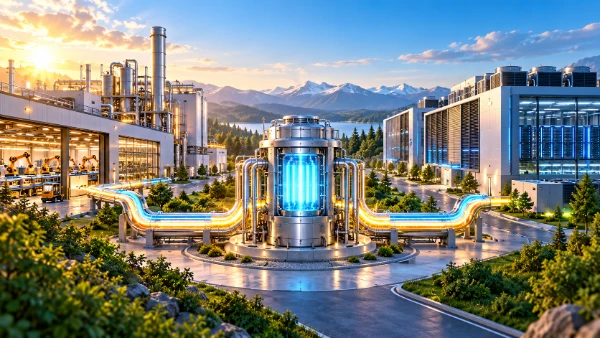
Microreactors: Can Compact Nuclear Reactors Power Factories and Data Centres?
Factories and data centres need electricity they can rely on every hour, yet rising demand and ageing power networks are making that increasingly difficult to guarantee. Nuclear microreactors could offer an alternative by producing electricity close to where it is consumed, without requiring a conventional nuclear power station. These compact installations promise years of continuous operation, low operational carbon emissions and greater independence from external electricity supplies. In 2026, several developers are testing designs intended for industrial facilities, remote sites and digital infrastructure. However, commercial deployment remains limited, and questions about construction costs, nuclear safety, fuel availability and regulatory approval still need answers. Can these small reactors become a practical energy source for modern businesses?
What Are Nuclear Microreactors and How Do They Work?
A nuclear microreactor is a compact installation that produces energy through controlled nuclear fission. Inside the reactor, uranium atoms split and release heat, which can be converted into electricity or supplied directly to industrial processes. Unlike traditional nuclear power stations, which often generate more than 1,000 megawatts of electricity, microreactors typically have capacities measured in single-digit or low tens of megawatts. Their smaller output makes them potentially suitable for individual industrial sites, isolated communities and facilities requiring an independent electricity supply.
The main difference lies in how these installations are designed and delivered. Developers aim to manufacture much of a microreactor in controlled factory conditions before transporting it to its operating location. Some proposed systems use transportable modules, while others require permanent buildings and additional supporting infrastructure. Factory manufacturing could reduce construction work and improve consistency between installations, although these benefits still need to be demonstrated across commercial projects. Compact size also does not eliminate the need for radiation protection, physical security, cooling equipment or suitable land.
Microreactors are often confused with small modular reactors, or SMRs, but the distinction matters. SMRs generally cover a broader category of nuclear installations, including designs capable of producing hundreds of megawatts. For example, the British Rolls-Royce SMR design has a planned electrical output of 470 MW, considerably larger than a typical microreactor. Both technologies use modular construction principles, but they target different electricity demands. A large SMR could supply an entire industrial district, whereas a microreactor might serve one factory or a smaller data centre.
Compact Design, Long Fuel Cycles and Continuous Energy Production
One attraction of nuclear microreactors is their potential to operate for several years between refuelling operations. Depending on the design, developers are targeting fuel cycles lasting five years or longer. This differs from conventional nuclear plants, which normally refuel at shorter intervals. Long operating cycles could be valuable for remote mines, industrial facilities and locations where regular fuel deliveries are expensive. Nevertheless, fuel longevity does not mean that a reactor can run indefinitely without inspections, maintenance or the eventual replacement of nuclear fuel.
Several developers are using advanced cooling systems to simplify their designs. Some reactors circulate gas to remove heat, while others use specialised heat pipes that transfer energy away from the reactor core. Certain designs also incorporate passive safety features intended to limit overheating without relying entirely on powered equipment or continuous operator intervention. These approaches may reduce the complexity of selected systems, but every design must demonstrate that its safety measures function under realistic operating conditions before receiving the necessary authorisations.
A microreactor producing 5 MW of electricity continuously could theoretically generate 43,800 megawatt-hours annually. Actual production would be lower when maintenance, outages and other operating limitations are considered. That amount of energy could make a meaningful contribution to a medium-sized industrial facility, although suitability depends on its electricity demand. A steelworks or large artificial intelligence data centre may require several reactors or a much larger generating installation. Matching reactor capacity to real consumption is therefore essential before deciding whether the technology offers an economical solution.
Can Microreactors Supply Enough Energy for Factories and Data Centres?
Industrial companies depend on reliable electricity for machinery, refrigeration, ventilation and automated production systems. Unexpected interruptions can damage equipment, waste raw materials and stop entire production lines. A suitably sized microreactor could provide a stable source of electricity for facilities with predictable demand. Possible applications include food processing, chemical manufacturing, specialised materials production and remote mining operations. Some designs could also deliver useful heat, reducing the need to burn natural gas for selected industrial processes, provided their operating temperatures meet the requirements of the facility.
Data centres face a different but equally demanding situation. Servers operate around the clock, while cooling systems and supporting equipment add substantially to total electricity consumption. According to the International Energy Agency’s Energy and AI report, global data centre electricity demand could increase from approximately 415 terawatt-hours in 2024 to 945 terawatt-hours by 2030. Artificial intelligence is a major driver of that growth. As new facilities become larger, securing sufficient electricity connections can become a significant obstacle to development.
Microreactors could help address this challenge by generating electricity near computing facilities rather than relying exclusively on distant power stations. Local generation may reduce dependence on long-distance transmission infrastructure, although it would not necessarily remove the need for a grid connection. Data centres require exceptional reliability, so backup generators, batteries and other protective systems would remain important. A single small reactor would also be insufficient for many hyperscale facilities, where electricity demand can reach hundreds of megawatts. Larger nuclear installations or groups of reactors may be more appropriate for those applications.
Real Nuclear Projects Targeting Industrial and Digital Infrastructure
American company Radiant is developing Kaleidos, a portable nuclear microreactor designed to generate approximately 1.2 MW of electricity. Its intended applications include remote operations, critical infrastructure and locations traditionally dependent on diesel generators. Radiant is targeting a fuel cycle of around five years. In April 2026, the US Department of Energy confirmed that its Demonstration of Microreactor Experiments facility, known as DOME, was ready to support experimental reactor testing at Idaho National Laboratory. Radiant and Westinghouse were among the developers selected for initial testing opportunities, marking an important step towards demonstrating these technologies under controlled conditions.
Westinghouse is pursuing another approach with its eVinci microreactor, designed for applications including industrial facilities, remote communities and commercial electricity users. In September 2026, the US Department of Energy reported successful criticality testing associated with the eVinci development programme. The experiment provided information about the behaviour of the reactor’s fuel and design. However, criticality testing is not equivalent to operating a completed commercial power station, and further engineering, regulatory and operational milestones remain necessary before widespread deployment can begin.
Major technology companies are also supporting advanced nuclear energy, although not every project involves a microreactor. In October 2024, Google announced an agreement with Kairos Power to support the deployment of up to 500 MW of electricity generation from advanced small modular reactors by 2035, with the first deployment targeted for 2030. The agreement illustrates growing demand for dependable low-carbon electricity from the technology industry. However, Kairos Power’s planned commercial reactors belong to the broader SMR category rather than the smallest microreactor class. This distinction is important when assessing which nuclear technologies could realistically meet different data centre requirements.
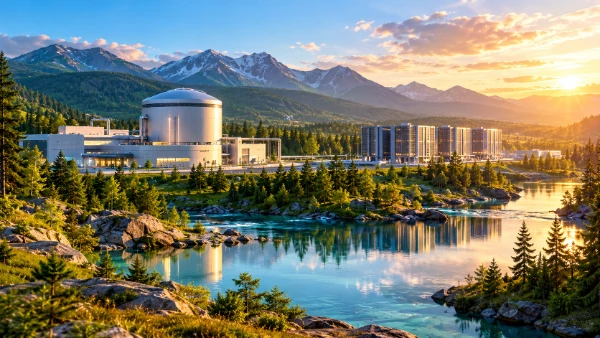
Costs, Safety and the Future of Nuclear Microreactors
The economics of microreactors remain one of the biggest uncertainties facing developers. A compact reactor requires less generating equipment than a conventional nuclear power station, but it must still meet demanding nuclear safety standards. Fuel manufacturing, transport, security arrangements, insurance, regulatory procedures and eventual decommissioning all contribute to total costs. Producing standardised reactors in greater numbers could lower manufacturing expenses over time. However, commercial experience is currently insufficient to establish reliable electricity prices for most proposed designs, making direct comparisons with established technologies difficult.
For an industrial customer, the financial calculation extends beyond the price of electricity generation. A company must consider whether the reactor will operate independently or alongside the grid, how much backup capacity it needs and who will manage the nuclear installation. Some businesses may prefer purchasing electricity through a long-term agreement with a specialist operator rather than owning a reactor themselves. Location also matters. Where grid electricity is inexpensive and dependable, a microreactor may struggle to compete. Its potential value increases at sites facing expensive fuel deliveries, frequent outages or major electricity connection constraints.
Nuclear safety and public acceptance are equally important. Smaller reactor designs may incorporate features that reduce certain accident risks, but they still contain radioactive materials requiring strict controls. Regulators must assess reactor behaviour, emergency arrangements, security, environmental effects and the management of radioactive waste. Many advanced designs also depend on high-assay low-enriched uranium, commonly called HALEU, for which commercial supply remains limited. Building a dependable fuel supply chain will be essential if manufacturers intend to produce reactors at scale rather than deliver only isolated demonstration units.
Will Microreactors Become a Practical Energy Solution After 2026?
The most promising early customers are likely to be organisations with unusually expensive or unreliable conventional electricity supplies. Remote mining operations, isolated industrial installations and critical infrastructure facilities provide examples where reliable local generation could justify higher initial investment. Some industrial sites may also benefit from using reactor heat alongside electricity. Nevertheless, deployment decisions will depend on completed safety assessments, proven operating performance and credible long-term costs. Microreactors should therefore be viewed as an emerging option rather than a commercially established replacement for ordinary power supplies.
Progress in 2026 is significant because developers are moving beyond computer simulations and engineering concepts towards increasingly realistic testing. Facilities such as DOME provide opportunities to gather evidence about reactor performance, operating procedures and safety systems. Successful demonstrations could support future commercial licensing and investment decisions. Even so, building a factory capable of producing reactors repeatedly, securing nuclear fuel and obtaining permission for individual sites may take several additional years. The speed of deployment will differ between countries because nuclear regulations, industrial policies and public attitudes are not identical.
Compact nuclear reactors could eventually supply electricity and heat to selected factories, remote industrial operations and smaller data centres. They offer the possibility of steady low-carbon generation with less dependence on external fuel deliveries and transmission networks. Yet they are unlikely to meet every industrial energy requirement or replace larger nuclear stations, renewable electricity and energy storage. Their commercial future depends on whether developers can demonstrate safe operation, manageable costs and reliable fuel supplies. For now, microreactors represent a credible technological opportunity, but their contribution to industrial electricity production will be determined by evidence from real operating projects rather than ambitious deployment forecasts.