

Programmable Materials: How Smart Surfaces Are Reshaping Electronics, Medicine, and Construction
Programmable materials have moved from laboratory concepts to real engineering tools by 2026. These materials can change their physical properties — such as shape, stiffness, conductivity, or permeability — in response to external signals like temperature, light, magnetic fields, or electrical input. What makes them particularly valuable is their ability to respond predictably and repeatedly, which allows engineers to design surfaces that actively adapt to their environment. This shift is influencing several industries at once, especially electronics, healthcare, and construction, where adaptability often defines performance and efficiency.
How Programmable Materials Work in Modern Engineering
At the core of programmable materials is the integration of responsive components into their structure. These components may include micro-scale actuators, embedded sensors, or chemical compounds that react to environmental triggers. For example, shape-memory alloys return to a predefined form when heated, while electroactive polymers deform under electrical stimulation. These behaviours are not accidental but carefully engineered through material science and computational modelling.
Another important aspect is the use of metamaterials — engineered structures whose properties come from geometry rather than composition alone. By arranging internal patterns at micro or nano scale, scientists can create materials that bend light in unusual ways or absorb vibrations more effectively than traditional materials. This opens possibilities for applications such as adaptive optics or noise control systems.
Advances in machine learning are also playing a role in designing programmable materials. Algorithms analyse large datasets to predict how a material will behave under certain conditions. This reduces development time and allows for more precise tuning of properties, making programmable materials increasingly reliable for real-world applications.
Key Types of Smart Materials Used Today
Shape-memory materials remain one of the most widely used categories. They are applied in aerospace components, medical devices, and robotics due to their predictable transformation behaviour. These materials can switch between configurations without mechanical intervention, reducing the need for complex moving parts.
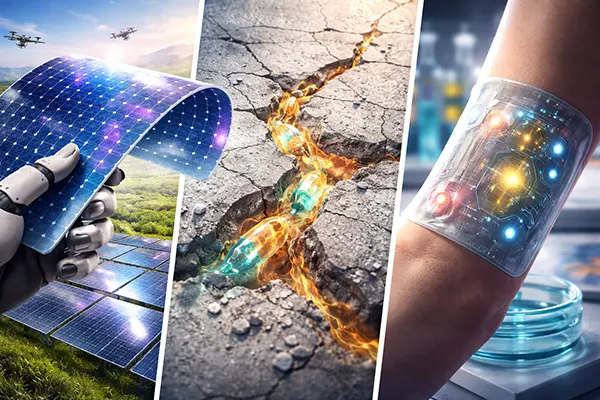
Self-healing materials are another important development. These materials can repair cracks or damage automatically through embedded microcapsules or chemical reactions. In construction and electronics, this significantly extends product lifespan and reduces maintenance costs.
Responsive coatings and surfaces are gaining attention as well. These coatings can adjust properties such as reflectivity, temperature resistance, or antimicrobial activity. They are increasingly used in both consumer electronics and medical environments, where surface behaviour directly affects safety and performance.
Applications in Electronics and Digital Systems
In electronics, programmable materials are enabling devices that can adapt physically to user needs. Flexible displays and foldable devices rely on materials that maintain conductivity while bending repeatedly. By 2026, these materials are no longer experimental; they are integrated into mainstream consumer products.
Thermal management is another area where smart surfaces are making a difference. Materials that adjust heat conductivity depending on temperature help prevent overheating in processors and batteries. This is particularly important in high-performance computing and electric vehicles, where thermal efficiency directly impacts reliability.
Programmable materials are also contributing to the development of reconfigurable circuits. Instead of fixed layouts, certain components can alter their structure in response to software commands. This allows for more versatile hardware that can be updated without physical replacement, reducing electronic waste and extending device usability.
Future of Adaptive Electronics
One emerging direction is the creation of self-morphing devices that change shape depending on context. For instance, a wearable device could adjust its form for comfort or performance during different activities. This concept is already being tested in prototypes for healthcare monitoring and sports technology.
Another development is in soft robotics, where programmable materials replace rigid mechanical systems. These robots can perform delicate tasks, such as handling fragile objects or assisting in surgical procedures, thanks to their flexible and responsive structures.
Integration with artificial intelligence is expected to expand further. Materials may eventually respond not just to physical stimuli but also to predictive models, adjusting behaviour before conditions change. This would mark a shift from reactive systems to anticipatory ones.
Impact on Medicine and Healthcare Technologies
In medicine, programmable materials are improving both treatment and diagnostics. One example is smart implants that adjust their properties based on the body’s condition. These implants can change stiffness or release medication in response to biological signals, making therapies more personalised.
Drug delivery systems are also evolving. Materials can be programmed to release medication at specific times or in response to particular chemical markers. This reduces side effects and increases treatment effectiveness, especially in chronic conditions.
Wearable medical devices benefit from adaptive materials as well. Sensors embedded in flexible substrates can maintain accuracy even when the body moves. This ensures continuous monitoring without discomfort, which is essential for long-term health tracking.
Programmable Materials in Surgical and Clinical Use
Minimally invasive surgery is becoming more precise благодаря materials that can change shape inside the body. Instruments can be inserted in a compact form and then expand or reconfigure during the procedure, reducing tissue damage.
Tissue engineering is another promising field. Programmable scaffolds can guide cell growth by altering their structure over time. This supports the regeneration of complex tissues and may lead to more effective treatments for injuries and degenerative diseases.
In clinical environments, smart surfaces are used to reduce infection risks. Materials with adaptive antimicrobial properties respond to contamination levels, providing an additional layer of protection beyond traditional sterilisation methods.
Transformation of Construction and Infrastructure
The construction sector is adopting programmable materials to improve durability and efficiency. One example is concrete that can heal its own cracks through embedded bacteria or chemical agents. This reduces maintenance costs and extends the lifespan of structures.
Adaptive building facades are another application. These surfaces can change transparency, reflectivity, or insulation properties depending on weather conditions. As a result, buildings consume less energy for heating and cooling, which supports sustainability goals.
Programmable materials also contribute to safer infrastructure. Materials that respond to stress or vibration can provide early warnings of structural issues. This allows for preventive maintenance before serious damage occurs.
Smart Buildings and Future Urban Systems
Buildings equipped with responsive materials can adjust to environmental conditions in real time. For example, walls may alter their thermal properties during temperature fluctuations, maintaining indoor comfort without excessive energy use.
Urban infrastructure is also evolving. Roads and bridges built with smart materials can monitor their own condition and communicate data to maintenance systems. This reduces the likelihood of unexpected failures and improves public safety.
Looking ahead, programmable materials are likely to become standard in sustainable construction. As manufacturing processes improve and costs decrease, their adoption will expand beyond specialised projects into everyday building practices.