
Hydrogen Aviation Engines: Can They Replace Conventional Jet Fuel?
Hydrogen has moved from a largely experimental aviation concept to a serious field of aircraft and propulsion research. By 2026, manufacturers have already run aero engines on hydrogen, flown small hydrogen-electric aircraft, tested megawatt-scale fuel-cell systems and begun working with regulators on certification. Yet this progress does not mean that hydrogen is ready to replace conventional jet fuel across commercial aviation. The central difficulty is no longer simply whether hydrogen can power an aircraft: several projects have already shown that it can. The harder questions concern how much hydrogen an aircraft can carry, how it can be stored safely, where airlines will obtain low-emission hydrogen, how airports will handle it and whether the economics can compete with increasingly efficient conventional aircraft and sustainable aviation fuels. Hydrogen therefore represents a credible route towards lower-carbon flight, particularly on regional and shorter routes, but its eventual role will depend on far more than the engine itself.
How Hydrogen Aviation Engines Work in Practice
There are two main ways to use hydrogen for aircraft propulsion. The first is direct combustion. Instead of feeding kerosene-based Jet A-1 into a gas turbine, an adapted engine burns hydrogen. The basic principle remains familiar to the aerospace industry: fuel releases energy, hot gases are produced and the engine generates thrust. Because hydrogen contains no carbon, burning it does not create carbon dioxide from the fuel itself. It is not completely free of atmospheric effects, however. High-temperature hydrogen combustion can still produce nitrogen oxides, while the large amount of water produced during operation means that researchers must also assess potential effects on contrails. For engine manufacturers, the advantage is that decades of gas-turbine knowledge remain relevant even though fuel delivery, combustion control and aircraft storage require substantial redesign.
The second route is hydrogen-electric propulsion using fuel cells. Here, hydrogen is not burned. A fuel cell combines hydrogen with oxygen from the air and produces electricity, which powers electric motors connected to propellers or fans. Water and heat are the main products of the electrochemical reaction, with no carbon dioxide or nitrogen oxide produced by the fuel-cell propulsion process during flight. Airbus now considers this route particularly important. After assessing both hydrogen combustion and fuel cells under its ZEROe programme, the manufacturer announced in 2025 that it would concentrate its hydrogen aircraft work on fully electric fuel-cell propulsion. In July 2026, Airbus and MTU Aero Engines announced plans for a joint venture dedicated to developing and eventually commercialising a hydrogen fuel-cell engine, with the new company expected to begin operating in 2027.
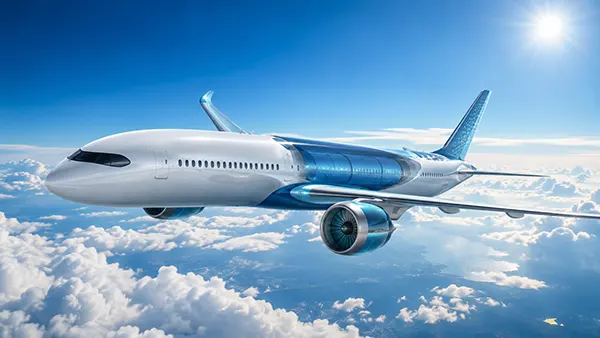
Both approaches face the same fundamental storage problem. Hydrogen is exceptionally light for the amount of energy contained in a kilogram, but it occupies much more space than conventional aviation fuel. For aircraft that need useful commercial range, manufacturers are therefore concentrating heavily on liquid hydrogen. Hydrogen becomes liquid only at cryogenic temperatures of roughly -253°C, so it cannot simply be carried in modified wing tanks designed for kerosene. It requires heavily insulated tanks, specialised pipes, valves, monitoring equipment and procedures for controlling pressure and evaporation. These tanks are generally expected to sit inside the fuselage or in specially designed sections of the aircraft. That changes the balance between passenger space, cargo capacity, range and aircraft size, making hydrogen propulsion an aircraft-design challenge as much as an engine challenge.
What Has Actually Been Proven by 2026
Several important technical milestones have already moved hydrogen aviation beyond laboratory theory. Rolls-Royce and easyJet ran a modern Rolls-Royce AE2100 aero engine on 100% hydrogen in a ground test in 2022. Further work demonstrated hydrogen combustion in a full annular combustor based on the Pearl engine under conditions representing maximum take-off thrust. The companies have also developed plans for full-scale hydrogen gas-turbine testing at NASA’s Stennis Space Center in the United States. These tests do not amount to a commercial hydrogen airliner, but they demonstrate that an existing family of aviation gas-turbine technologies can be adapted to work with hydrogen and allow engineers to study ignition, fuel delivery, combustion behaviour and emissions under conditions much closer to real aircraft operation.
Hydrogen-electric flight has produced equally significant evidence. In September 2023, H2FLY completed four flights of its piloted HY4 demonstrator using liquid hydrogen and a fuel-cell electric propulsion system. One flight lasted more than three hours. H2FLY calculated that changing the HY4 from gaseous to liquid hydrogen could double its potential maximum range from around 750 kilometres to approximately 1,500 kilometres. Airbus has meanwhile tested much larger systems intended to provide knowledge relevant to commercial aircraft. It demonstrated a 1.2 MW hydrogen propulsion system in 2023 and completed end-to-end testing involving fuel cells, electric motors, gearboxes, inverters and heat exchangers in 2024. Airbus is now preparing further work on the interaction between propulsion equipment and liquid-hydrogen storage and distribution, with integrated ground testing planned for 2027.
Certification work is also becoming more concrete. In April 2026, the US Federal Aviation Administration published final special conditions for ZeroAvia’s 600 kW electric engine, an important regulatory step for a company developing hydrogen-electric propulsion. ZeroAvia has submitted its first complete engine for aircraft carrying up to about 20 passengers for certification and is also developing a larger system aimed at the 40-80-seat category. European research is progressing in parallel. Clean Aviation projects are testing hydrogen combustion, fuel cells, fuel systems, tanks and aircraft integration, while the HYDEA project reported progress in areas including hydrogen combustion testing and successful engine restart under simulated altitude conditions. The important distinction is that these remain development and certification programmes. As of 2026, hydrogen propulsion has demonstrated genuine capability, but there is still no hydrogen-powered commercial airliner operating routine scheduled passenger services.
Where Hydrogen Can Compete With Jet Fuel
Hydrogen’s strongest argument is its ability to separate aircraft propulsion from fossil carbon. Direct hydrogen combustion releases no carbon dioxide from the fuel, while fuel cells can remove both carbon dioxide and nitrogen oxide emissions from the onboard power-generation process. Fuel-cell systems can also benefit from the efficiency of electric motors and may offer lower propulsion noise, particularly for regional aircraft using propellers. Direct combustion has a different advantage: it allows manufacturers to retain more knowledge from conventional gas-turbine development. Neither solution is automatically superior in every aircraft category. Fuel cells have to provide sufficient power without making the aircraft excessively heavy, while hydrogen combustion must control nitrogen oxides and other non-CO2 climate effects. The industry is therefore testing both approaches even though individual manufacturers, including Airbus, have made more specific technology choices for their own programmes.
Aircraft size and route length will probably determine where hydrogen becomes practical first. Current European research programmes are not designed around immediate replacement of large intercontinental aircraft. Clean Aviation has examined hydrogen fuel-cell concepts carrying around 100 passengers over approximately 1,000 nautical miles and hydrogen-combustion concepts carrying roughly 120-150 passengers over distances of up to around 1,400 nautical miles. These numbers should be understood as research targets rather than specifications for aircraft already available to airlines. They nevertheless show where the industry sees an achievable early market: regional and short-to-medium-range flying. A European aviation roadmap associated with EASA has similarly indicated that long-haul operations relying on hydrogen or direct electric power should not be expected before 2050 under its baseline scenario.
This makes sense when the physical properties of the fuel are considered. A regional aircraft returning regularly to the same group of airports could operate within a controlled hydrogen supply network and would need less fuel on each journey. An intercontinental aircraft would have to carry far more liquid hydrogen, magnifying the penalty created by large insulated tanks and potentially reducing passenger or cargo capacity. Airlines also need reliable refuelling at both ends of a route. A new regional service connecting two hydrogen-equipped airports is therefore considerably easier to organise than a global long-haul network requiring compatible fuel supplies at hundreds of destinations. Early hydrogen aircraft may consequently serve selected routes rather than behaving as unrestricted substitutes for today’s kerosene-fuelled fleets.
The Climate Benefit Depends on Clean Hydrogen
The environmental case for hydrogen aviation starts long before fuel reaches the aircraft. Hydrogen is an energy carrier rather than a primary source of energy, so it first has to be produced. Much of the hydrogen manufactured today still comes from fossil fuels. According to the International Energy Agency’s Global Hydrogen Review 2025, low-emission hydrogen was expected to account for less than 1% of global hydrogen production in 2025. This matters because replacing jet fuel with hydrogen made from unabated fossil fuels would shift a significant part of the carbon problem from the aircraft to hydrogen production. Aviation gains the greatest climate benefit when hydrogen comes from low-emission processes, particularly electrolysis supplied with low-carbon electricity, or from other production methods capable of achieving genuinely low lifecycle emissions.
Even renewable hydrogen is not equivalent to using renewable electricity directly. Electricity is required to produce hydrogen through electrolysis, and additional energy is needed to purify, compress or liquefy the gas, transport it and keep liquid hydrogen at very low temperatures. Fuel cells then convert hydrogen back into electricity onboard the aircraft. These conversion stages introduce losses. Aviation may nevertheless have a stronger reason to accept those losses than many ground transport sectors because aircraft cannot simply carry extremely large batteries without a severe weight penalty. Hydrogen can store considerably more energy per unit of fuel mass than batteries, giving it a potential role on routes where battery-electric aircraft would struggle to provide an acceptable combination of range, payload and turnaround time.
Removing carbon dioxide from the exhaust also does not make every climate question disappear. Hydrogen combustion creates water vapour and can produce nitrogen oxides, while fuel cells produce water without combustion-related nitrogen oxide emissions. At normal aviation altitudes, scientists are studying how water emissions from future hydrogen aircraft may influence contrails and their overall warming effect. ICAO’s 2025 environmental reporting notes that these non-CO2 effects still require further measurement and modelling. For this reason, credible assessments increasingly look at the complete climate impact rather than describing hydrogen flight simply as emission-free. Fuel cells can eliminate important in-flight pollutants, and hydrogen combustion removes carbon from the fuel, but the production method, flight altitude, contrail behaviour and wider energy system all influence the final environmental benefit.
Can Hydrogen Really Replace Conventional Jet Fuel?
A complete replacement of conventional jet fuel by hydrogen is not a realistic near-term scenario. Aviation operates a global fleet ranging from small regional aircraft to wide-body jets that can remain airborne for more than 15 hours, and one propulsion technology is unlikely to suit all of these missions. Hydrogen appears most promising for selected regional and short-to-medium-range aircraft, particularly new designs built around dedicated hydrogen tanks and propulsion systems. Long-haul aviation presents a much harder problem because of the volume of fuel required. Sustainable aviation fuels and increasingly efficient gas turbines therefore remain important alongside hydrogen. Rather than one technology eliminating another, the more credible picture is a mixed future in which different energy sources are used according to aircraft size, route length, fuel availability and economics.
Timing is another reason for caution. Airbus originally created considerable attention around the possibility of hydrogen-powered commercial aircraft in the 2030s, but its current work is focused on maturing the necessary technologies rather than announcing an immediately certifiable production aircraft. Its 2025 ZEROe update moved towards a fully electric fuel-cell concept, and the July 2026 agreement with MTU demonstrates that the propulsion system itself is still entering a new phase of industrial development. Clean Aviation continues to use 2035 as a target for possible entry into service of future hydrogen aircraft concepts, but such dates depend on successful demonstrations, certification, economically viable aircraft and sufficient fuel infrastructure. A target for technology development should therefore not be treated as a guaranteed airline service date.
Jet fuel also benefits from something hydrogen cannot quickly reproduce: a century of aviation infrastructure and operational experience. Airports already store enormous quantities of aviation fuel, airlines understand its handling requirements, existing aircraft are designed around it and global supply chains support it. Hydrogen requires different tanks, refuelling equipment, safety zones, procedures, training and fuel-production capacity. Aircraft themselves will also have to pass demanding certification programmes before carrying passengers. This means a hydrogen transition cannot happen simply because an efficient engine becomes available. Aircraft manufacturers, engine companies, airports, energy producers, regulators, fire services, maintenance organisations and airlines all have to develop compatible systems at approximately the same pace.
What Must Change Before Large-Scale Commercial Use
Certification is one of the most important remaining steps. Aviation regulators cannot approve an unfamiliar fuel and propulsion system by assuming that rules written for kerosene aircraft automatically cover every new risk. Hydrogen introduces questions involving cryogenic storage, leaks, ventilation, pressure control, tank protection during an accident and safe refuelling. Fuel-cell electric propulsion also changes the relationship between the aircraft’s power source, electric motors, cooling equipment and control systems. The regulatory framework is still developing: an EASA certification memorandum issued in 2025 for electric and hybrid propulsion systems specifically excluded hydrogen technologies from its scope. This does not mean hydrogen aircraft cannot be certified. It shows that additional rules, standards and agreed methods of demonstrating safety still have to mature alongside the hardware.
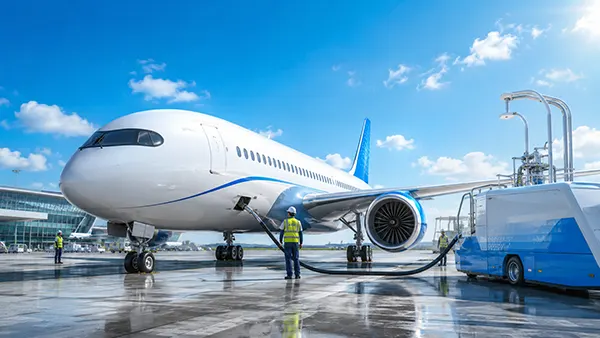
Airports present the second major challenge. Liquid hydrogen cannot simply be delivered through every existing aviation-fuel installation. Airports may need specialised storage, transfer and refuelling equipment as well as access to hydrogen production or dependable transport networks. European projects are already testing how this could work. The EU-supported GOLIAT programme brings together Airbus, H2FLY, airport operators, research organisations and hydrogen specialists to develop liquid-hydrogen refuelling technology, demonstrate ground operations at European airports and contribute to future standardisation. Such projects are essential because an aircraft is commercially useful only when airlines can refuel it predictably, safely and quickly. Infrastructure is therefore likely to grow first around selected airports and routes rather than appearing simultaneously across the global aviation network.
By 2026, the evidence supports a balanced assessment. Hydrogen aviation is no longer merely speculative: engines have run on hydrogen, liquid-hydrogen fuel-cell aircraft have flown, larger propulsion systems are being tested and certification work has begun. At the same time, no project has yet demonstrated the combination of aircraft size, range, fuel supply, infrastructure, certification and economics required to replace conventional jet fuel on a global scale. The most plausible development is gradual adoption beginning with smaller aircraft and selected regional or short-haul services, followed by larger applications if storage, fuel-cell power density, hydrogen combustion, airport infrastructure and clean-hydrogen production improve sufficiently. Conventional jet fuel use can decline substantially over time, but hydrogen is more likely to become one important part of aviation’s future energy mix than a universal replacement for every aircraft and every route.