
Recycling Rare Earth Elements from Electric Motors: The Hidden Challenge of “Clean” Mobility
The rapid shift towards electric vehicles has been widely framed as a cornerstone of sustainable transport. Yet behind the visible reduction in tailpipe emissions lies a less discussed issue: the growing dependency on rare earth elements used in electric motors. These materials, including neodymium, dysprosium and praseodymium, are difficult to extract, environmentally demanding to process, and even more complex to recycle. As demand increases in 2026, the gap between technological ambition and material recovery remains a critical challenge for the industry.
Why Rare Earth Elements Matter in Electric Mobility
Electric motors in modern vehicles often rely on permanent magnets made from rare earth elements. These magnets enable higher efficiency, reduced weight and improved performance compared to traditional alternatives. Without them, many electric drivetrains would require bulkier designs and consume more energy.
Global demand for rare earth elements has surged alongside the growth of electric vehicles. According to industry projections for 2026, EV production continues to expand rapidly, placing additional pressure on supply chains that are already concentrated in a limited number of countries. This concentration introduces both economic and geopolitical risks.
Despite their name, rare earth elements are not necessarily scarce in the Earth’s crust. The real challenge lies in their extraction and processing, which involve complex chemical procedures, significant energy use and environmental side effects such as toxic waste generation.
Environmental Cost Behind “Clean” Technologies
The production of rare earth materials involves mining operations that can lead to soil degradation, water contamination and radioactive by-products. These impacts are often located far from the markets where electric vehicles are sold, creating a disconnect between consumption and environmental cost.
In 2026, regulators in Europe and other regions are increasingly scrutinising supply chains, requiring manufacturers to disclose sourcing practices and environmental footprints. This transparency highlights the hidden emissions associated with supposedly low-carbon technologies.
The environmental burden does not end with extraction. Processing rare earth elements requires high-temperature treatments and chemical separation, both of which contribute to greenhouse gas emissions and industrial waste.
Why Recycling Rare Earth Elements Remains Difficult
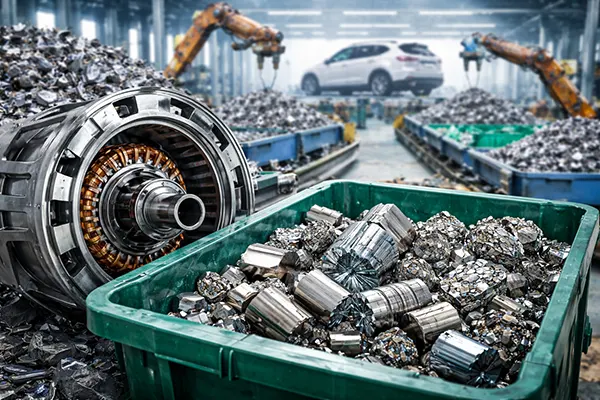
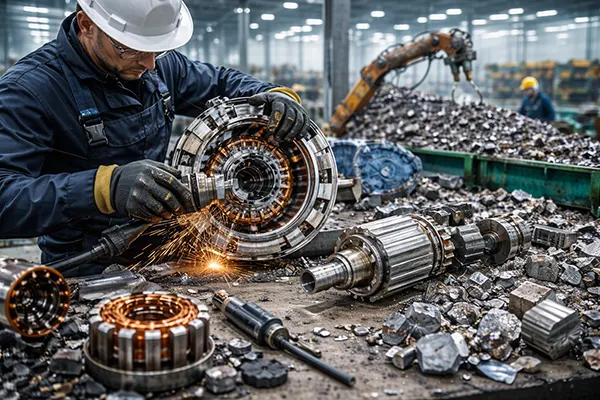
Recycling rare earth elements from electric motors is technically possible but rarely implemented at scale. One of the main challenges lies in the design of motors themselves, where magnets are often embedded in ways that make disassembly complex and costly.
Current recycling processes typically involve shredding components, followed by chemical extraction. This approach can lead to material losses and reduced purity, making recovered elements less attractive for reuse in high-performance applications.
Economic factors also play a role. In many cases, it is still cheaper to extract new rare earth materials than to recycle them. This imbalance slows investment in recycling infrastructure, despite growing environmental concerns.
Technological Innovations and Their Limitations
Several emerging technologies aim to improve recycling efficiency, including hydrogen-based magnet separation and advanced hydrometallurgical methods. These approaches show promise in laboratory and pilot-scale settings.
However, scaling these technologies to industrial levels remains a challenge. Equipment costs, energy requirements and process complexity limit widespread adoption, particularly for smaller recycling facilities.
Another issue is standardisation. Electric motors vary significantly across manufacturers, making it difficult to implement universal recycling solutions. Without consistent design practices, recycling remains fragmented and inefficient.
What Needs to Change by 2030 and Beyond
To address these challenges, the automotive industry must reconsider how electric motors are designed. Design for disassembly is becoming a key principle, enabling easier recovery of valuable materials at the end of a product’s lifecycle.
Policy frameworks are also evolving. In 2026, the European Union continues to advance circular economy regulations, including mandatory recycling targets and extended producer responsibility schemes. These measures aim to shift the economic balance in favour of recycling.
Collaboration across industries is essential. Manufacturers, recyclers and policymakers need to align standards, share data and invest in infrastructure to create a viable recycling ecosystem.
The Role of Alternative Technologies
Some manufacturers are exploring motor designs that reduce or eliminate the need for rare earth elements altogether. Induction motors and switched reluctance motors are gaining renewed attention as potential alternatives.
While these technologies can reduce dependency on critical materials, they often involve trade-offs in efficiency, cost or performance. As a result, they are unlikely to fully replace rare earth-based systems in the near term.
A balanced approach is emerging, combining improved recycling methods, better design practices and selective use of alternative technologies. This strategy reflects a more realistic path towards sustainable mobility, acknowledging both progress and limitations.